-

Wicked Engine’s graphics in 2024
We are near the end of 2024 and I wanted to write up a long post about the current state of the rendering in Wicked Engine. If you are interested in graphics programming, then strap yourself in for a long read through some coarse brain dump, without going in too deep to any of the…
-

Texture Streaming
Texture streaming is an important feature of modern 3D engines as it is can be the largest contributor to reducing loading times and memory usage. Wicked Engine just got the first implementation of this system, and here you can read about the details in depth. Overview There are many various forms of texture streaming, here…
-

Dynamic vertex formats
There are a variety of ways to send vertex data to the GPU. Since DX12 and Vulkan, we can choose to use the old-school input layouts definitions in the pipeline state, or using descriptors, which became much more flexible since the DX11-era limitations. Wicked Engine has been using descriptors with bindless manual fetching for a…
-

Graphics API secrets: format casting
If you spend a long enough time in graphics development, the time will come eventually when you want to cast between different formats of a GPU resource. The problem is that information about how to do this was a bit hard to come by – until now.
-

Derivatives in compute shader
This post shows a way to compute derivatives for texture filtering in compute shaders (for visibility buffer shading). I was missing a step-by-step explanation of how to do this, but after some trial and error, the following method turned out to work well.
-

Shader compiler tools
Wicked Engine used Visual Studio to compile all its shaders for a long time, but that changed around a year ago (in 2021) when custom shader compiling tools were implemented. This blog highlights the benefits of this and may provide some new ideas if you are developing graphics programs or tools.
-
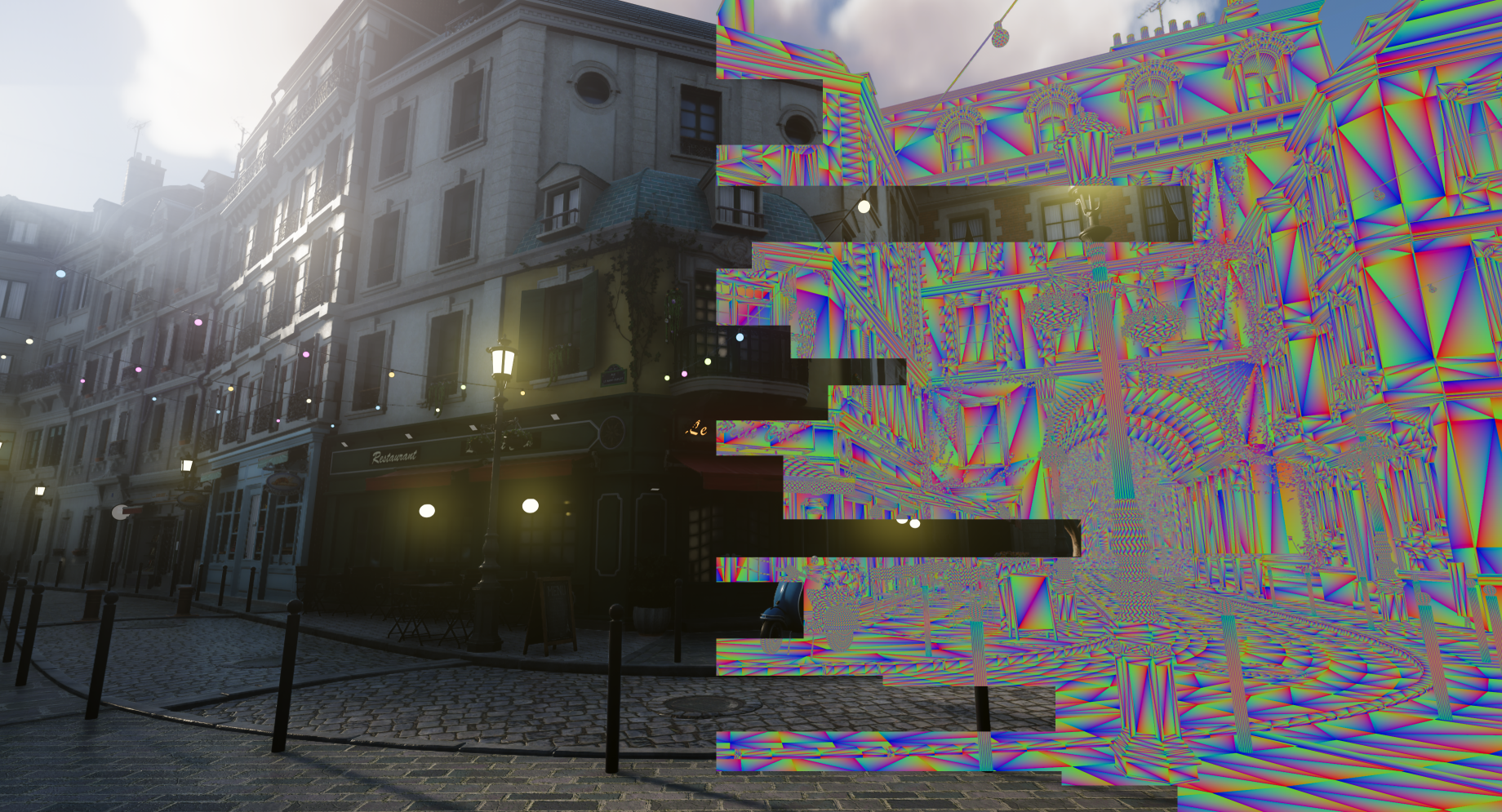
Future geometry pipeline
Lately I’ve been interested in modernizing the geometry pipeline in the rendering engine, for example reducing the vertex shaders. It’s a well known fact that geometry shaders are not making efficient use of the GPU hardware, but similar issues could apply for vertex and tessellation shaders too, just because there is a need for pushing…
-

Bindless Descriptors
The Vulkan and DX12 graphics devices now support bindless descriptors in Wicked Engine. Earlier and in DX11, it was only possible to access textures, buffers (resource descriptors) and samplers in the shaders by binding them to specific slots. First, the binding model limitations will be described briefly, then the bindless model will be discussed.
-
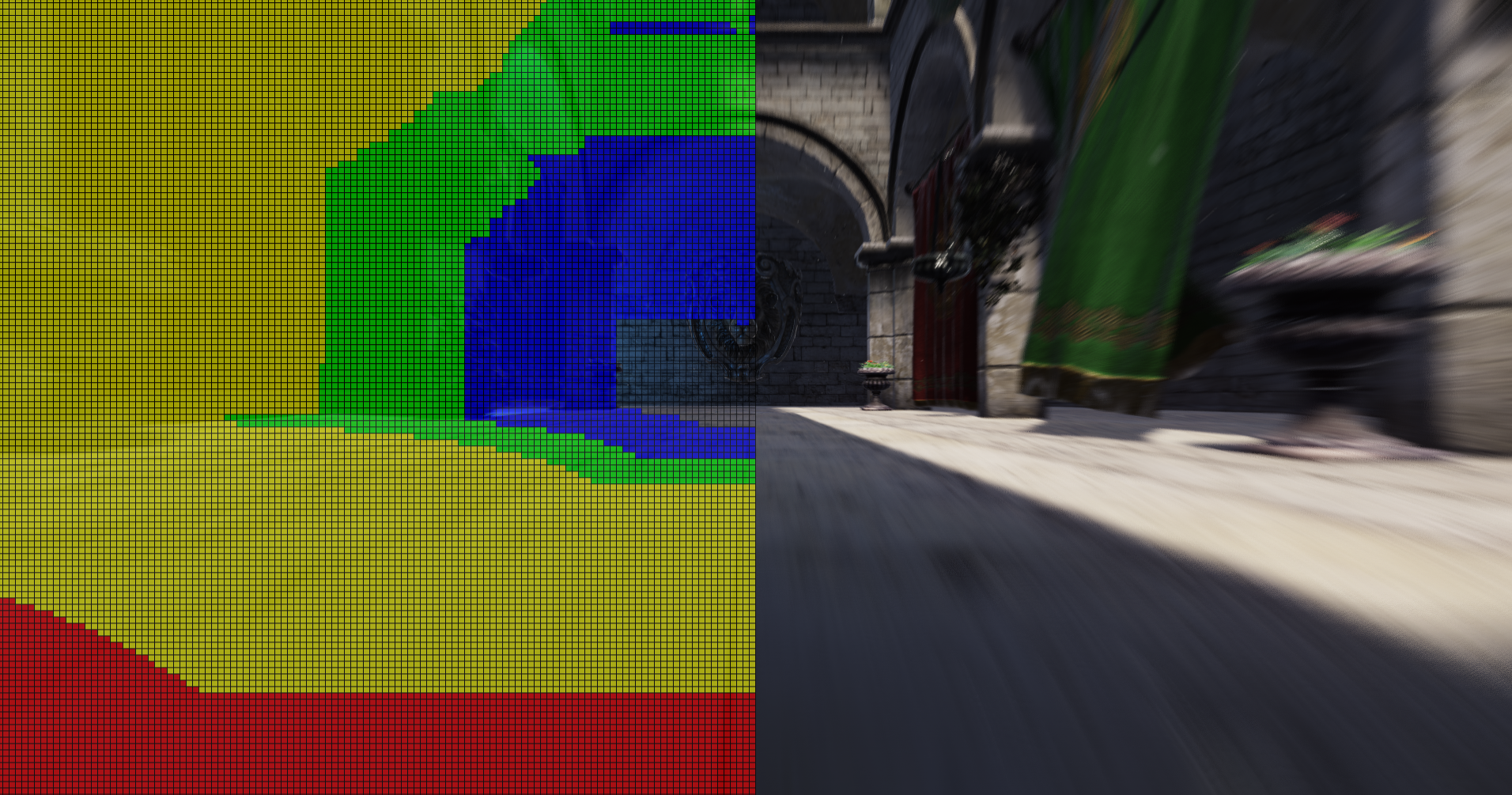
Variable Rate Shading: first impressions
Variable Rate Shading (VRS) is a new DX12 feature introduced recently, that can be used to control shading rate. To be more precise, it is used to reduce shading rate, as opposed to the Multi Sampling Anti Aliasing (MSAA) technique which is used to increase it.
-

Tile-based optimization for post processing
One way to optimize heavy post processing shaders is to determine which parts of the screen could use a simpler version. The simplest form of this is use branching in the shader code to early exit or switch to a variant with reduced sample count or computations. This comes with a downside that even the…
You must be logged in to post a comment.